Talent and Aspirations vs Financial Ability
Start learning about motorsports sponsorship now
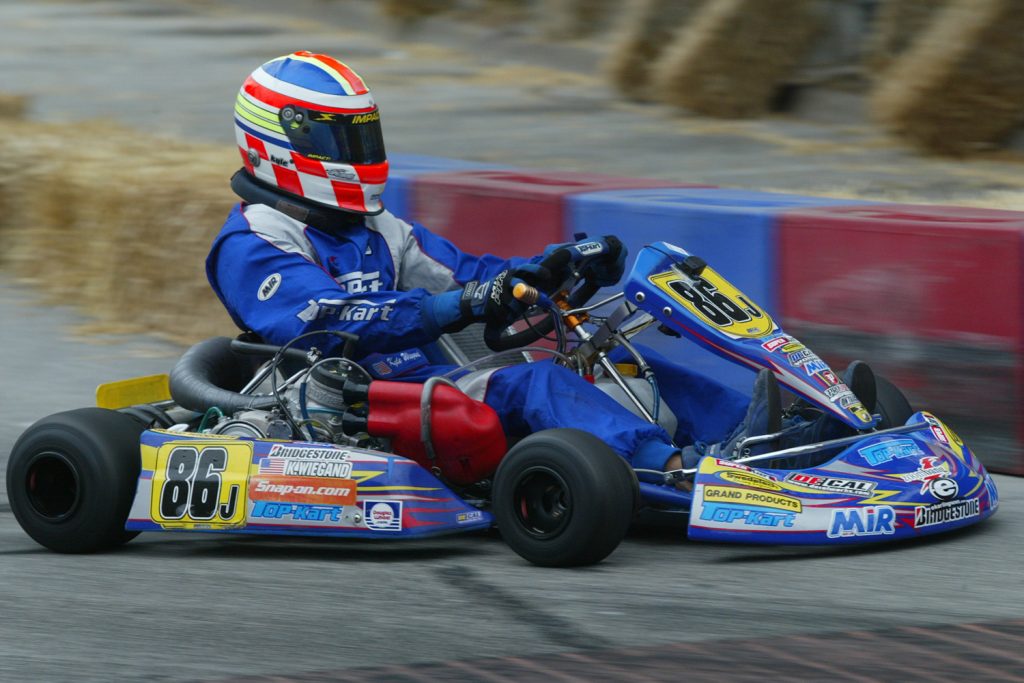
Sponsorship in motorsports hits at all levels, including karting (Photo: EKN)
Every few years, I decide that it’s time to write a new column focused on the world of professional motorsports and the significant costs involved in making the move from karting to car racing. I’ve been involved in numerous conversations recently with families asking how to find the funding to move their kids into car racing, and many discussions with parents who are already in car racing and are struggling to find the budget to move to the next level and keep their kid’s dreams alive. So, here are my thoughts. The overall theme is this – start learning now. Racing costs money and that money has to come from somewhere.

USF Juniors is the first step in the USF Pro Championships (Photo: Gavin Baker – USF Pro Championships)
As we all know, karting is different for everyone. For some, it’s their chosen form of the sport where they’ll race all their lives. For others, karting is looked at as a well-established training ground for a dream career as a paid driver. Every driver on the F1 grid got his start in karting and the recent Indianapolis 500 field was almost solely karting graduates, so the model is there. This editorial is for those young men and women, and their families, who dream of becoming a professional race car driver. This won’t be a step-by-step guide to traversing the different aspects of motorsports sponsorship en route to IndyCar, IMSA, or NASCAR, because I’m far from an expert in that respect. This editorial is simply a well-intended recommendation to start focusing time, effort, and resources on the single most important aspect of the sport when it comes to ‘making it’ – finding the funding to keep moving up the ladder. The higher you rise, the more expensive it gets. The key topic is sponsorship and finding the money needed to get to the top. And you need to learn about the craft of sponsorship now.
If you’re still with me, and still looking for answers, let’s continue.
The motivation for this edition of this column has been the many discussions I’ve had with parents over the last few months about how to find sponsorship and how to fund their child’s racing career. Before we dive into my thoughts, I’ll take the time now to better educate those of you who aren’t fully aware of my experience and position outside of karting.
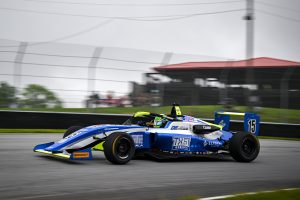
Sponsorship partners can follow you from karting into other ranks of motorsports (Photo: Gavin Baker – USF Pro Championships)
In addition to being a 30-year journalist and commentator in karting, and the Publisher and Editor-in-Chief of eKartingNews.com since 2004, I’m also the Series Development Director and Commentator for the USF Pro Championships (formerly known as the Road to Indy), which is a three-level development program for IndyCar consisting of USF Juniors, USF2000, and USF Pro 2000. I spend every day working with parents who have their kids already competing in the ‘minor leagues’ of professional racing. They’re all investing significant resources to support their children’s dreams of becoming a professional race car driver, and I’m certain that they’re also all looking further down the road to when they’ll get to a place where they’ll also be challenged to have the financial means necessary to pay for a season’s seat.
To keep it real, it costs around $300,000 for a season in USF Juniors, but not far up the ladder, the budget for a season in Indy NXT is between $1.5-$1.7 million and you’ll likely need to fund your kid’s first year or two of IndyCar….maybe more. Expect that quote to be around five to 10 million. Again, we’re talking about a serious level of financial investment, but it is possible to find investors and sponsors to help support the necessary budget.
As I said in the intro paragraph, racing costs money.
Even in the face of those massive numbers, racers continue to move from karting through the USF Pro Championships to Indy NXT and IndyCar. The dream remains. And many are able to do it because they’ve learned how to find sponsorship and/or investors. Yes, there are families that are incredibly well off and can afford to pay the bills right through to the top, but they are not the norm. Those who hit the inevitable financial wall certainly wish that they knew more about motorsports sponsorship and partnerships and that they got into this area when their kids were young and in Cadet karting. Racecraft isn’t the only thing that is good to learn when you’re young. The earlier you can make sponsorship part of your program, the better.

Sponsorship programs can begin as young as Cadet racing (Photo: EKN)
My contention continues to be that it’s wise to figure out how to craft, sell, and service a sponsorship program while your son or daughter is running in Cadet or Junior karting, when the budget is significantly smaller. This concept works for club racers just as well as it works for national karters. The principles are the same. Your karting program has some value in terms of marketing for companies, if developed and presented correctly. It’s your job to find out what those marketing deliverables are.
With that laid out, I believe that there are some keys to starting early in learning and activating sponsorship. First off, you need to become a student of the craft. A quick Google search on ‘motorsports sponsorship’ will bring up a number of websites that you can read through to begin learning the ins and outs. Search YouTube as well, where you’ll find a ton of videos to watch. Take in as much content as you can as you begin to learn about what it is that you, your driver, and their program could bring to a sponsor. For a potential sponsor, it may be as little as the ‘warm feeling’ or ‘public perception’ they’ll get from supporting a young racer, or maybe you can leverage your own social circle to provide some business-to-business connections (B2B) or business-to-consumer (B2C) benefits. If you can get your friends to buy a product or service from your ‘sponsor’, that’s a direct benefit from their investment in your son or daughter’s program. Again, this is a very basic concept in what is a vastly larger system of marketing and business development.
Second, I firmly believe that your child must be a core team player in the effort to both find and service a sponsor. He or she needs to be part of the education, effort, and sponsor search so that they’re fully engaged with effort. They need to understand that the only way that they get to race is if they can help find some sponsorship, even if it’s just 25% of the budget. If they can help find and service 25% of a $10k budget, or $2500 in sponsorship, they’ll be a big help when you’re looking for $1.5 million in 10 years for Indy NXT. Learning these skills now will pay dividends down the line. And, in reality, Indy NXT will likely be north of two million by then.
I’ve laid it out in this way many times, in many face-to-face conversations. Here’s an example I often use when talking to parents, detailing how I see young karters getting their feet wet in sponsorship sales, activation, and service. Let’s say your racing budget for a season is $10k and you want to get your young driver some experience in managing a $2500 sponsorship (remember that 25% I talked about?). Even if you have to give your child’s grandparents the $2500 yourself to have it come back around to you on their behalf, if your young driver helps put together a sponsorship deck and proposal and then ‘sells’ it to them during a face-to-face ‘sponsor sales pitch’, this will set everything in motion.
When I say ‘servicing’ your sponsor, I’m referring to providing your partner with the ‘deliverables’ you’ve offered in the program, from social media exposure and branding to logos and graphics on the driver’s kart and suit etc. Can you get your local newspaper to do an article on your driver? If so, make sure your sponsor is mentioned, maybe even a quote from them in the piece explaining why they’re supporting this young local athlete. In the case of having grandparents ‘sponsor’ your child, the ‘service’ may be a post-race call to his or her grandparents to ‘report’ on every weekend. It’s a basic example, but if you extrapolate that to taking care of a bigger money partner down the line, you can see where I’m going. You need to provide what you’ve promised. In fact, it’s better to under-promise and over-deliver. Communication is huge in sponsor relations. The kids who learn what taking care of a sponsor means when they’re young will be power players in the sport in the future.

Personalized suits, displaying your sponsors on the season, is one way to provide exposure (Photo: ppkartingfl.com)
I’m by no means a sponsorship expert, but I’ve read many of the books available and I’ve watched hours of videos online. Many people ask me if there are dedicated sponsorship salespeople in the sport. My honest answer is that I don’t personally know of any. I think it’s a common thought that you can either find a salesman who will ask for a large upfront fee to pay for their service, which comes with no guarantee, or someone who promises to work for you to find you sponsorship in return for a percentage of the revenue from the program. Honestly, I’ve never heard a single story of either working at the karting or junior formula development level. I’m sure this happens successfully at the very top levels of the sport, but those experienced sales individuals have specific talents and aren’t interested in helping anyone in karting or entry level car racing programs. The ROI on their efforts just isn’t there.
So that means again that it comes down to the parents and the driver. You must learn as much as you can from the avenues that are available. Take advantage of every sponsorship and marketing book available, and every piece of content on Google and YouTube.
While I don’t know of anyone who successfully sells sponsorship at our level of racing, there are options to work directly with incredibly experienced people who have made motorsports marketing and sponsorship their life’s work. For example, I was introduced to Ken Unger from CHARGE through my work with the USF Pro Championships when we enrolled in their ‘Sponsorship Success Method’ which provides a ton of knowledge and information through their online portal.
Like you, every racing series is always on the search for title sponsors and marketing partners. In addition to a package of educational modules, Ken’s company provides one-on-one and group coaching, focusing on providing their clients with insight and tools. They work with their clients to properly price a sponsorship program based on the available deliverables, building a proper sponsorship deck, identifying potential sponsorship targets, and how to deal with the sales effort itself. It’s a great option for drivers and their families looking for guidance as the navigate through the daunting world of motorsports sponsorship. If you find this to be an intriguing option, check them out on their website – sponsorshipsuccessmethod.com
The bottom line is this…racing costs money and it’s easy to see from all forms and levels of the sport, motorsports sponsorship can be found if you know where to look and if you’re armed with the right knowledge and tools. Racing sponsors are all around us. Just like when you first got into karting, it took you some time to learn all the skills you needed to find success. You were patient as you learned, and the success followed. It’s the same way with motorsports sponsorship. You need to educate yourself steadily so that you can build a value-filled program and get find the right targets who can benefit from what you’re offering. If you build a program that provides value, you’ll be able to sign partners to leverage what you offer.
And, if you take anything from this article, it’s that you need to start NOW if you want success and the financial wherewithal to advance your driver up the motorsports ladder.









Archives