The Missing Middle: How Karting Grows Again
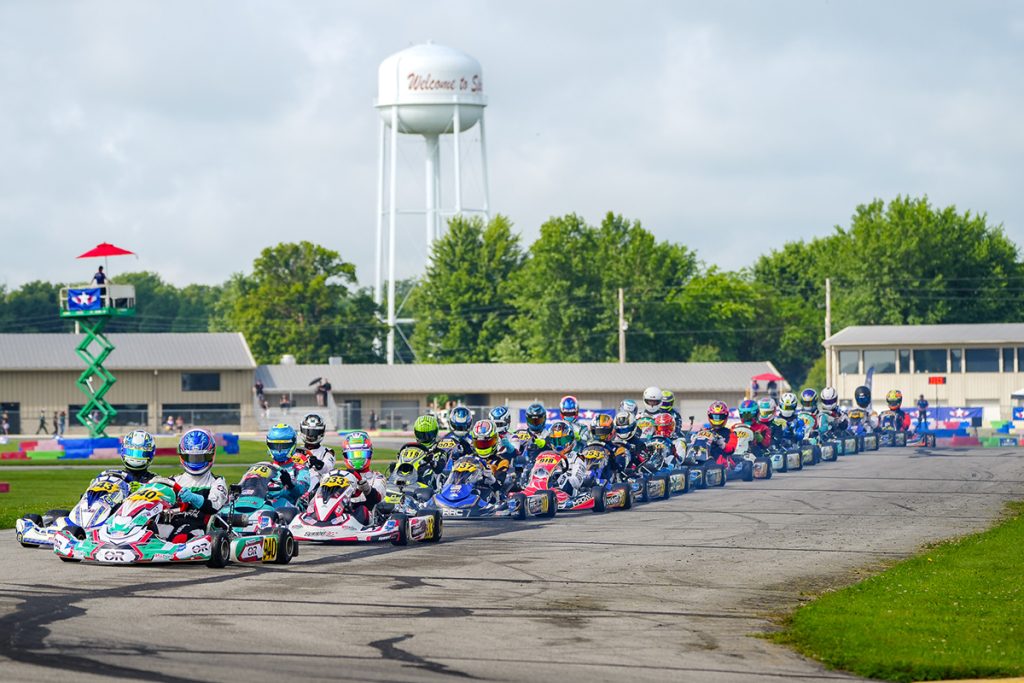
(Photo: Studio52.us)
The following is a column from Keith Warren, who is a karting dad from Kentucky and the owner of Race Select, a motorsports registration and operating system that is used widely across the industry.

Keith Warren of Race Select (Photo: Studio52.us)
The usual answers all point upward. National racing is too expensive. There are too many series. The driver pool is spread too thin, divided across competing organizations. Privateers are vanishing. Every one of those things is true—but those are symptoms, not the disease.
You can’t have healthy national racing without healthy local and regional racing, and that requires a steady stream of new families who make it past their first season. The top of the ladder gets all our attention. The bottom gets new arrivals every weekend. What’s missing is on those first few rungs of the ladder —the part that turns a curious newcomer into a capable, committed racer. That’s where we are failing.
Two Doors into the Sport
Most new racers come through one of two doors.
The first is the legacy driver, someone in the family raced, they have experience. They know what to buy, how to prep a kart, what a race weekend feels like, and how to move up the ladder. That family arrives with something priceless: institutional knowledge. They’re going to be fine.
The second door is everyone else—the family coming from indoor karting, an arrive-and-drive program, or some other corner of motorsports. They show up with enthusiasm, a competitive streak, and usually the means to participate. What they don’t have is experience. And that’s exactly where the sport starts losing people.
The challenge was never getting people interested in racing; tracks all over the country prove every weekend that people love it. The challenge is helping them survive the leap from new customer to consistent competitor.
Mentorship by Luck
Most kart clubs in America run on volunteers. Outside of a handful of large organizations, race weekends are held together by people who are already stretched to the limit—running the event, helping their own kids compete, juggling club duties, and trying to keep the whole thing on schedule. They simply don’t have the bandwidth to be a full-time mentor to every new family that walks in.
Newcomers are left to figure it out alone. How do I set up the kart? What gear do I run? How do I actually help my kid get faster? To a veteran, those questions are almost too obvious to answer. To a first-year parent, they’re overwhelming.
It isn’t that people won’t help—many will. It’s that we’ve built a sport on informal acquaintances instead of intentional mentorship. Whether a new family makes it past the first few weekends often comes down to whether they happened to park next to the right person on their first day.
That’s not a system. That’s luck.
The New Kart Dad

Not all dads or parents come into the sport with knowledge about racing or being a mechanic, and need guidance (Photo: On Track Promotions – otp.ca)
The father walking into karting today is not the man who walked in thirty years ago.
A lot of them are professionals in their early-to-mid thirties with a seven-year-old in a rookie class. These are very sharp and accomplished people. What most of them did not do is grow up rebuilding engines or tuning carburetors in a garage. It is not that they cannot do these things, they have just never been exposed to it.
Yet we expect them to roll in on Saturday morning and thrive in a deeply mechanical sport. When they go looking for help online, they find conflicting advice, outdated information, and tutorials that quietly assume a baseline they don’t have. A veteran says, “Just add a little caster,” or “Bring the rear ride height up.” To him, that’s plain English. To a newcomer, it might as well be Latin.
We badly underestimate how intimidating those first six months are.
The Cost Trap
When a family can’t confidently manage their own equipment, the pressure runs one direction: hire it out. Hire a mechanic. Join a team. Buy the service because you don’t trust yourself to do the work.
There’s real value in professional teams, and they belong in this sport. But they should be a choice, not a requirement. A local race weekend with your kid, something that ought to cost a couple hundred dollars, should not quietly turn into two thousand just to feel competitive. Yet that’s exactly the impression a new family gets. They walk into the paddock, see the transporters, tents and teams only to draw the obvious conclusion: this is the price of admission, this is how you do it.
They either overspend or they quit. Neither one keeps them in the sport.
We are far stronger as a sport when families believe they can learn, improve, and compete without outsourcing every last piece of it.
The Vanishing Privateer
You can see the damage at the national level. Walk the paddock at a SKUSA or USPKS weekend and count the true privateers. In most cases the number is just a few.
That should worry all of us, because privateers have always been one of the clearest signs of a healthy grassroots sport. They’re the families who learned the craft, built real confidence, and got good enough to compete on their own. The privateer path used to be normal. It was expected. As it disappears, so does one of our biggest engines of long-term growth.
What This Actually Takes

The Margay Ignite is one example of ‘Arrive and Drive’ programs that help teach the basics of the sport (Photo: Margay Racing)
Karting doesn’t need another national series. It doesn’t need another championship. It needs better onboarding.
A few well-run arrive-and-drive programs are already doing real work to welcome these families, but they reach only a sliver of the market. The scalable answer has to come from the people who already run this sport—and most of it costs far less than anyone assumes.
Picture the academy none of us ever had: free curated lessons on fundamentals – basic maintenance, race-day prep, gearing, tires, driver development, a little chassis tuning. Not national-level setup theory. Just enough to feel like you know what you’re doing. Because most people don’t quit because karting is hard. They quit because they feel lost. Knowledge builds confidence, and confidence is what keeps families in the sport.
And remember who this is really for. Helping a dad get more capable is how a kid gets faster, and kids stay in this sport when they’re improving and having fun, not when they’re stuck at the back wondering why.
If You’re Reading This, You Can Help
If you’ve read this far, you’re probably already in a position to do something about it. Here’s where each of us can start.
Track operators: build the on-ramp from rental to ownership—beginner-only practice days, a coach on the grid, and a clear, written path for indoor and arrive-and-drive regulars who want their first kart.
Regional series: reward the rookies. A first-year class, a rookie award, and recognition that comes for showing up and improving, not just winning. Partner with clubs near you, offer scholarships and discounts to drivers who are ready to move up.
National organizations: make the privateer the hero. A “privateer of the weekend,” real coverage of those families, and recognition that makes self-sufficiency something the whole paddock aspires to.
Clubs: name two or three experienced families as rookie mentors, run a short newcomer orientation at every event, keep a shared library of checklists and how-to videos, and give every new family a number to call.
Team owners: open your tent for in the evenings and run a free setup clinic—how to set ride height, check chain alignment, mount your engine properly. You have the knowledge and the canopy already. Use them to build a new generation of racers, not just sell a service.
Manufacturers: build the beginner content we’re missing—short, clear videos that explain not just what to adjust, but why.
None of that takes a transporter, a big budget, or a new championship. It takes thirty minutes and a willingness to teach.
Survive the First Season
Strip all of it down and it comes to one honest question: what are we doing to help a brand-new family get through their first season?
Not join. Survive. Because that’s where we lose them.
The future of this sport won’t be decided at the front of a national final. It’ll be decided in the pits at local tracks, weekend after weekend, by families deciding whether they belong here. Every national champion was once a beginner who felt lost. Every driver we create, and every family we keep, makes karting stronger—and the newcomer we help today becomes the veteran who helps the next one tomorrow.
That’s how local racing grows. That’s how regional and national racing grows. And that’s how karting grows for all of us.










Archives