Behind the Laptop: One Push Forward
Superkarts! USA goes new direction with pushback bumper system
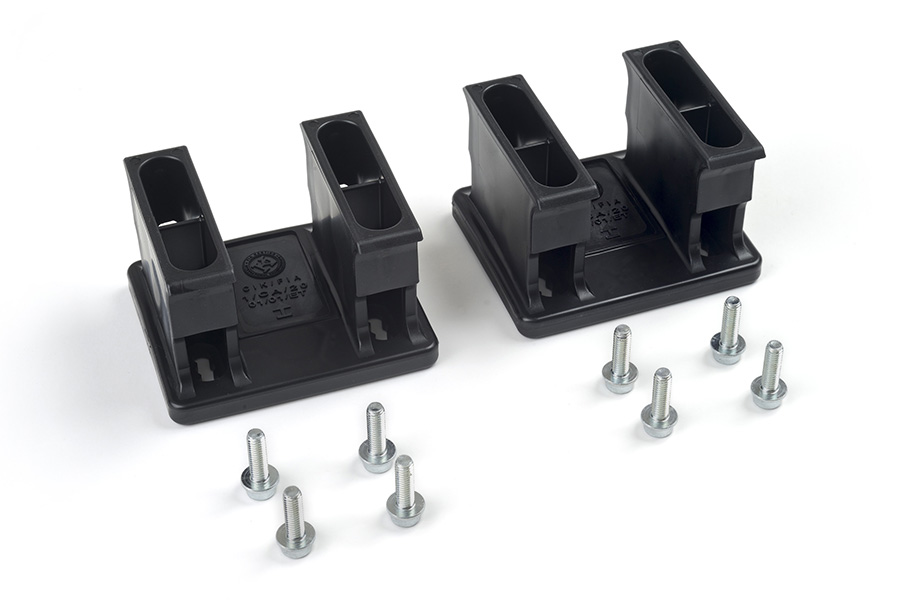
SKUSA has announced three classes are not required to run the pushback bumper system
The pushback bumper system has been part of karting in the United States since 2017. The United States Pro Kart Series program was the first to debut the system, with Superkarts! USA following in 2018. The system introduced by the FIA and FIA Karting during the 2015 season is aimed at ‘making racing fairer by fighting against bad behavior on the track’. The system went through a period of testing and implementation, however, in today’s international competition the ‘front fairing mounting kit’ has become mandatory. Here in the United States, the pushback bumper system has drawn mixed reviews over the last 10 years.
The recent announcement of Superkarts! USA removing the pushback bumper system for Pro X30, X30 Junior and KA100 Master has certainly sparked up conversation on social media.
I find it is best to help break down the different factors when looking at the pushback bumper.
The system’s initial benefit in the early years and still today – and what I feel has become the only positive – is the impact the pushback bumper has had on the start of races. One of the key factors to Superkarts! USA implementing the system was the lack of respect and outright dangerous maneuvers by drivers at the drop of the green flag. Going back to the 2018 SKUSA Pro Tour WinterNationals at NOLA Motorsports Park, many of the single-speed starts were ruined by drivers in the rows further back essentially ‘plowing’ their way through the field in the opening corner. Since then, we have seen safer, less chaotic starts across all age groups at all events across the country implementing the pushback bumpers in all divisions.
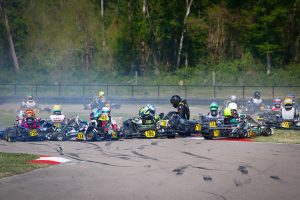
The racing that took place at the 2018 SKUSA Pro Tour WinterNationals at NOLA is what led the organization to adopt the pushback bumper penalty (Photo: On Track Promotions – otp.ca)
What this boils down to is the fear of starting off the race with a penalty due to the pushback bumper. The mentality of the racers, for the majority of them on the grid, is to get through the opening corner without having the bumper push in.
This is where Superkarts! USA will have to steer the ship in the correct path. While there has been no official statement or announced procedures regarding the starts of races for these categories, I feel there will be an ‘all eyes on deck’ approach with their officials and, of course, the SKUSA officiating camera system.
My view is that there should be no issues surrounding Pro X30 since they are supposed to be the ‘pros’ of the sport. KA100 Master is filled with drivers who used to race without the pushback bumper system and, for some, before plastic bodywork was even implemented. I anticipate no issues there as well.
The focal point will be on the X30 Junior field. These drivers, since moving up from Kid Kart, have been racing with the pushback bumper system from day one in a kart. Even still, Junior racing is where we continue to see contact or rough driving at the start of the race. My hope, and I believe SKUSA is anticipating this as well, is that these kids compete in a professional manner and not with the careless attitude of unlimited supply of parts that will take them to the next session or the next race.
The other side of the pushback bumper system is the penalty structure. Over the last 10 years, series that utilize the system have implemented different penalties surrounding the pushback bumper. One of them is the review process of having the penalty overturned for a non-incident responsibility situation.
Since we are reviewing the Superkarts! USA decision to remove the pushback bumper system from selected categories, we will look at their procedure regarding a penalty and protest.
Penalty List:
Qualifying: Loss of Fast Lap
Race: One Side (3 seconds) / Two Sides (6 seconds)
Protest Rule:
109.6 Push Back Bumper Protest: PBB Protests are allowed after any competition session. On-Board video ‘ready to play’ on the competitor’s laptop shall accompany the protest form and fee within the standard protest window. Competitors shall provide on-board video of the entire race, which may be reviewed in conjunction with SKUSA’s own video. Video should be queued to play at the moment of inadvertent contact. Any frontal contact after an inadvertent bumper deployment, either partial or full, may result in the protest being denied. 109.6.1 PBB Protests are considered normal protests and will count towards your (1) Protest per competition day.
From my perspective of watching hundreds of races over the decade featuring the pushback bumper system, many of the situations where the system is activated are not from an incident where a penalty needs to be enforced. Many times, the system is triggered from getting bottled up at the start. Other times it’s getting into the back of the kart ahead, without causing the driver in front to either spin or be shoved off the racetrack. In the early years of the system, we saw a driver at the front of the field hit a curb in the perfect manner to trigger the pushback bumper and lose a race over it prior to the review system in place.
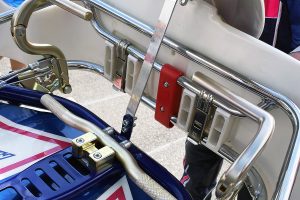
SKUSA went no pushback bumper at the opening round of the SKUSA Winter Series in 2022 before they returned the following month (Photo: EKN)
This is where I do agree with Superkarts! USA in removing the pushback bumper system as it does add more ‘behind the scenes’ work by team managers, competitors and officials to review these non-penalty-based situations. I feel it’s a waste of time to spend the energy of reviewing footage, delaying the results, and putting more stress on the officials having to deal with ‘paperwork’ rather than putting their focus toward the action on track.
This is where I believe there should be only two ways to go about the pushback bumper system in karting, at least here in the USA. Follow the FIA Karting standard of a penalty is enforced without a review process or go in the direction of Superkarts! USA and not mandate the pushback bumper system.
To me, the pushback bumper system is something similar to a no-go gauge in tech. If the pushback bumper is activated, you receive a penalty. If not, you are cleared in that regard. It is the responsibility of the driver to make sure their pushback bumper remains unchanged; from the time they leave the grid to the time they reach the scale line. As the sport of karting is geared more and more toward the younger ages, we still need to place accountability on the person behind the wheel. What I love about sports, including karting, is that it helps to teach us life lessons. We can’t continue to have this middle ground or place the blame on someone else when penalties occur. Accept the penalty, move on and perform better then next time behind the wheel.
And let’s face it, the FIA is already implementing more plastic on the kart with their new anti-launch system. What is going to happen if or when that system begins to reach the USA? We are moving closer and closer to turning competition karts into bumper karts at the carnival.










Archives