Factory Karts Introducing New FZ Shifterkart Engine Program
Shifterkart engine platform to provide turnkey packages for all age levels
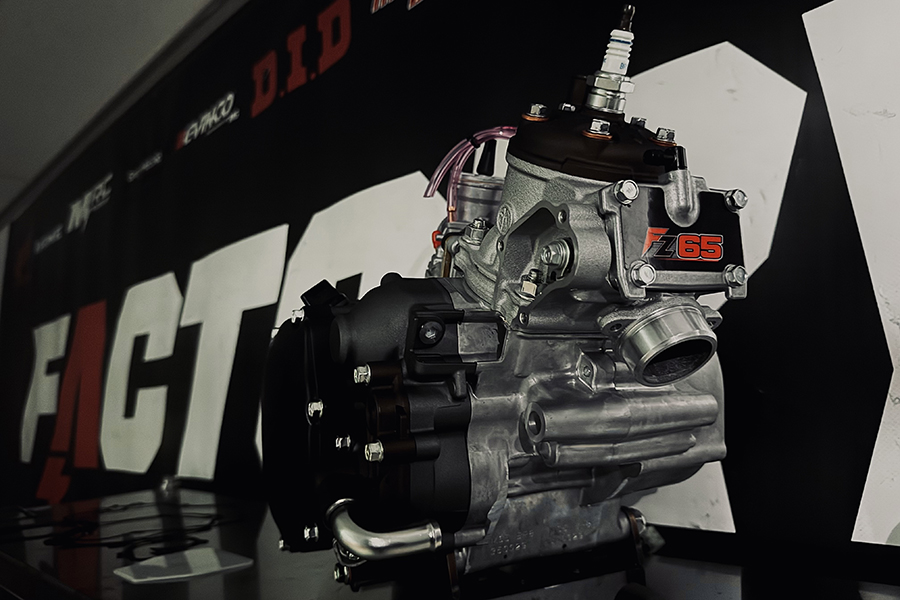
Factory Karts is set to launch the FZ engine platform (Photo: Factory Karts)
In 2020, Billy Musgrave did what no other American has done in over a decade. The four-time SKUSA SuperNationals winner elected to start a manufacturing effort to build a new American-made shifter kart. You have to go back to the mid-2000s and the iconic Trackmagic brand to discuss the last time American steel was bent, notched, and welded together to make a 125cc chassis in the United States. Having tested, raced, and won with his own brand, Musgrave and Factory Karts is rolling at full steam and new karts are being built and sold at a steady clip.

Billy Musgrave of Factory Karts (Photo: Factory Karts)
Major wins on the SKUSA Pro Tour in 2023 in both 125cc and 100cc models were key highlights. It’s not easy to break into the European dominated chassis industry and it takes time to grow roots with a new brand. The intriguing thing is that Musgrave’s not done. With the Factory Karts chassis line-up growing to include chassis for Cadet, Junior, and Senior single-speed applications, Billy set his passion to his next project – one that could represent the next generation of Stock Moto shifterkart racing engines. Musgrave is crafting and rolling out a new production-based MX engine line-up in partnership with Yamaha.
Shifterkart racing has been part of karting here in the United States and around the world for decades. In the late 2000s, gearbox racing was in a tough place in the United States. The arrival of the ICC powerplant in the early 2000s was touted as an ‘out of the box’ race motor that would save the sport from the costs of fully-built ‘mod-motos’; the stump pulling 125cc moto engines that had evolved to the point of needing copper head inserts and detonation counters. The ICC formula proved to be just a different base engine, as non-stop development work elevated the price for a race-ready engine similar to those of the mod moto, only with more expensive stock replacement components. Enter the Stock Honda program – centered on the 1999 Honda CR125 – which provided a platform that sustained 125cc shifterkart racing for many years. Eventually, and truly expectedly, Honda’s lack of desire to continue supporting the ’99 model resulted in the absence of replacement parts.

The start of the FZ engine platform began with the 65 (Photo: Factory Karts)
Superkarts! USA – the leading organization in promoting shifterkart racing in the USA – stepped away from the Stock Honda program, moving toward the IAME SSE 175 in 2019. Issues surrounding tuning, drivability, and reliability plagued the powerplant from gaining traction during its initial years. On the flip side was ROK Cup USA promoting their ROK Shifter engine platform. Many gearheads moved away from the SKUSA based program and began racing ROK at the national and regional levels. Eventually, SKUSA brought in the KZ engine platform that is recognized worldwide, with most shifterkart drivers now gravitating to that as we head into the 2024 season.
As we have seen with the KZ platform, engine costs have increased – both in initial cost and maintenance. Those numbers in turn have helped in a decrease of shifterkart racing at the local and regional levels – the area the Musgrave is hoping to revitalize with this new Yamaha engine program with the focus at providing affordable shifterkart package.
“I’ve seen what the Briggs 206 and 100cc engines have done for 4-cycle and single speed 2-cycle racing,” commented Musgrave. “When Stock Moto was at its peak, we had plenty of racers at the club and regional level that helped to fill up the national grids wherever we went to race. That is our mission with this engine platform, providing an easy and simple turnkey package for shifterkart enthusiasts and racers.”
When Factory Karts program was launched in 2020, COVID was locking people into their homes. Musgrave took advantage of the opportunity to test and tune on his ideas day-after-day with the chassis development. At the same time, the groundwork was being laid on a spec engine program. The first step in this ambitious effort was finding the right partner, and the Musgraves started with KTM. The popular manufacturer was excited, but like many businesses, when they emerged from the COVID shutdown, that were too far behind in production to commit. The company simply couldn’t commit to spare engines or parts for five years.

In addition to the 65, a 125 version along with an 85 and a 250 will be part of the FZ engine platform (Photo: Factory Karts)
Musgrave needed to continue looking for options, and this sent him down the road to leveraging their friendships with people within the Yamaha organization. It took about 1.5 years working out the details with Yamaha of Japan to put it all together.
What they came away with was a four-engine platform piggybacking off Yamaha’s production run of motors for their FZ motocross bike. They include the FZ65 (Cadet), FZ85 (Junior), FZ125 and FZ250.
When this program was first put into motion, Musgrave focused on the Cadet shifter formula, an area that he believes will be crucial to developing the next generation of shifter drivers. In the early 2000s, at the height of the Superkarts! USA wave of momentum that moved gearbox karting to the top of the American karting scene, there was a 60cc Novice class and an 80cc Junior category. So, leveraging the skills and desire of top young Cadet drivers like Jaxon Porter and Troy Ferguson, the Yamaha YZ65 was fitted to a Factory Kart Cadet frame to set everything in motion. This FZ65 motor package and its components have been essentially finalized.
One of the issues surrounding the new FZ65 package is making it work for current Cadet chassis. The Cadet shifter package requires front brake system, as will the Junior shifter rules for the FZ85 program. Musgrave and Factory Karts developed their Cadet frame to welcome the added brake system from their single speed program, along with the size of the engine itself onto the frame. With the current chassis manufacturers around the world focused on the smaller single-speed engines, Musgrave’s initial thoughts for the Cadet program is a Margay Ignite-style Factory Kart FZ65 spec package to launch the class at the club level.

A spec platform is the focus of the FZ engine line, including components (Photo: Factory Karts)
“The goal is to teach kids how to drive with front brakes,” added Musgrave. “Many of these kids who dive into shifterkart racing are looking for more speed, and with that comes the need for safety for both Cadet and Junior drivers. But what this also does is help to teach the kids how to drive with front brakes, something they will need to adapt to if or when they graduate into car racing. In order to do that, we can provide a full spec chassis/engine combination to help fill the need for the Cadet programs wishing to add this class.”
The FZ85 for the Junior class can be fitted onto any readily available full-size shifterkart chassis, along with the FZ125 and FZ250. All four engine packages have now been finalized, with modified production exhaust systems being manufactured by Pro Circuit to take advantage of the high-end powerband utilized in kart racing.
The rule structure is based around its spiritual successor to CR125 Stock Honda; No porting or polishing is allowed to the cylinder and cylinder head, no carburetor modifications, no exhaust modifications, etc. Each engine and components will have serial numbers to ensure quality control and help with the warranty program that Factory Karts will be providing for the engine.
Complete packages for the FZ platform will include a spec pipe, spec silencer, spec carburetor with no major modifications allowed to the engine or the components. Musgrave Racing Company (MRC) has been developing in-house motor mounts that will be available with each engine, as well as all the other accessories needed to get the proper fit and finish of an engine package implemented in this modern era.
“The idea is not to make the same mistakes as were done with the Stock Honda program,” Musgrave continued. “Yamaha is still building two-stroke engines and are still developing their bikes. They are committed to building and developing the two-stroke for the next decade. This level of quality control and quality in manufacturing is fantastic, something we did not have before with the old Honda program simply due to the age of the tooling they were using. If there are changes, it is because Yamaha has found improvements in either production or quality of the product and will be a step in the right direction.”
Once committed, Musgrave placed his first order at the beginning of 2023 for 270 engines. The first half of the order is already in the company inventory in California, and the second container arrived recently. A total of 50 FZ65 engines and 50 FZ85 will be assembled for retail along with 150 FZ125 and 20 FZ250 packages. Another batch of engines are scheduled for the start of 2025.

Pro Circuit will be the spec pipe manufacturer for the FZ engine line (Photo: Factory Karts)
Part of the affordability for the FZ engine platform is initial cost and maintenance costs, but also longevity. A cylinder will cost around $600-800 with a top-end rebuild kit retailing for roughly $120 – available anywhere Yamaha products are sold. During the testing period over the last two years, reliability has exceeded the initial goals. Tests showed top-ends lasting anywhere between 20-25 hours, with Yamaha suggesting 15-20 hours on a top-end rebuild to be safe. The bottom end of the engine in some cases were lasting 80 hours before rebuild during testing period. The suggested timeframe for that from Yamaha will be in the 50-60 hour range.
“We are working with select clubs in 2024, hoping to at least meet the minimum entry level to offer the class so that it will be included throughout the season,” Musgrave concluded. “Our hope is to start with Cadet and Junior classes. Our engine platform is already legal in the Open Shifter division that is offered at the ProKart Challenge here in California. However, this is not about running at the Superkarts! USA Pro Tour, or to offer a class at the SuperNationals just yet. This is about bringing affordable shifterkart racing to the customers. We’re not trying to replace or compete against Pro Shifter. Instead, the goal is to revive the ‘Semi-Pro’ and ‘Junior’ classes at the club level.”
Currently, the FZ engine platform will be sold under the Factory Karts / Musgrave Racing Company banner with retail sale set to begin sometime over the next month. Factory Karts is also offering private-labelled karts to existing race teams and dealers that want to add the Cadet Shifter, Junior Shifter, or other shifter platforms to their programs.



Archives