Fast Five: Thierry Germanovitch – Sodi Racing USA
French manufacturer continues expansion of new US market program
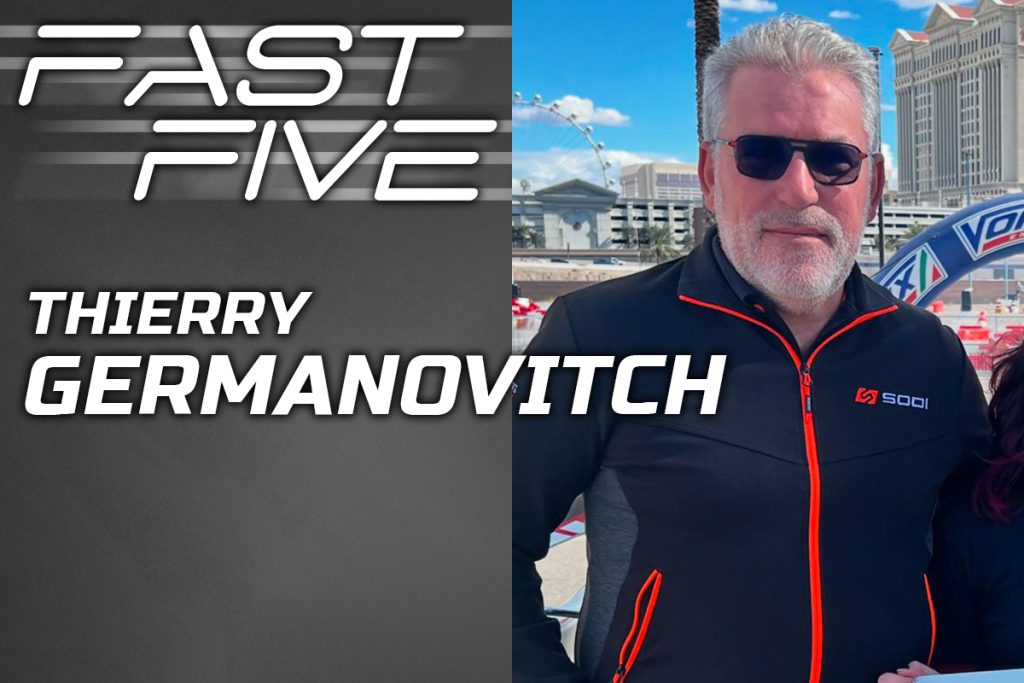
In 2023, one of global karting’s biggest brands made its official return to the North American market, having first debuted in Canada in 1996. Sodi Racing is a major player in the sport, both in the competition and rental karting business, and the launch of Sodi Racing USA under the management of ‘The Karting Distribution’ brought the French manufacturer back into one of the largest and most important karting markets in the world. Industry veteran Thierry Germanovitch was tasked with the responsibility of managing the development of the new program and, on the competition side, race wins and championships were enjoyed very early. Commercially, the Sodi Racing brand continues to expand with new dealers primed and ready to sell and support the company’s new chassis models heading into 2025. EKN sat down with Thierry for the first instalment of the return of our ‘Fast Five’, offering up a quintet of queries to one of the sport’s long-time players.
eKartingNews.com: Thierry, thank you for taking the time to chat with us. Before we look forward to 2025, what are your thoughts looking back on Sodi Racing USA’s season in 2024?
Thierry Germanovitch: To be honest, it was a season that was successful both on a sporting level with many victories in major national races and in almost all categories. At the same time, I had to temporarily take over the management of the official team for reasons external to Sodi once the season had already started. It was complicated because it was not planned. But, with a lot of hard work and after a successful launch year in 2023, we managed to confirm in 2024 that the Sodi chassis were extremely efficient. At the end, I finished the season extremely happy.
EKN: Launching any new operation is not without its challenges, so it’s fantastic to see Sodi Racing USA heading into the new year with all the pieces in place. Let’s now focus on the new season and all the development within the Sodi Racing USA program heading into 2025. Can you provide us with some insight into the addition of Velocity Racing as the official US team for the brand?
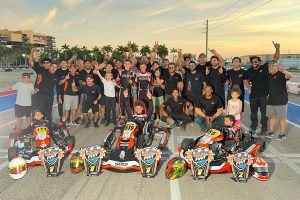
 TG: Since last summer, I have had several advanced discussions with teams interested in continuing the good work initially done by Piquet Sports. But, after a meeting with Kris Kenific, in September, I was convinced that we had identified the ideal partner for the years to come. Kris knows karting, he is a brilliant businessman, and he has a vision that I share for the development of the team. This is not a short-term project. With Ruben Carrapatoso as manager and Rick Rosin, who both were already working with me, the goal is simply to make Velocity Racing by Sodi USA the reference team in the United States for years to come. It will take time because our competitors are very good, but we are all extremely determined. In addition, the exceptional new Sodikart factory inaugurated just a year ago will allow us to push the racing like never before. Developments will be constant. The start of the season has been extremely good for Velocity with many good results and wins. I am sure it is just the beginning.
EKN: Thierry, one of the key goals for any manufacturer in a new market is set up a vibrant dealer network to ensure that the product is being sold and supported in as many regions as possible. The United States’ geography is in stark contrast to that of the countries in Europe, meaning that any manufacturers dealer network must be expansive. Just two years in, can you provide EKN Nation with an overview of Sodi Racing USA’s current footprint in the US?
TG: You are right. Developing a coherent network in the United States is complex. In Europe, the market is much more compact, and the main countries have many circuits. In France alone, we have more than 200 outdoor circuits! For the USA, my wish is to have a limited number of dealers but all of them with significant development potential. I don’t want dealers to compete against each other. I want them all to succeed and for their growth to be concomitant with ours. We have 10 official dealers today and we will probably double that number this year, but we will never have 100. That is not our strategy.
EKN: The FIA-CIK has completed a new chassis homologation period for 2025, and the following two seasons. Can you provide us with some insight into the new material and what the chassis line-up looks like?
TG: A new homologation allows for developments but, to be honest, it is never a revolution. The FIA-CIK regulations limit radical developments. However, our 2025 chassis benefit from a significant evolution of our frames, particularly with new materials used. We also have, for the Sigma RS3 Junior/Senior, a standard version and a CIK version now with a more flexible frame. The Cadet chassis benefits from these developments, but we did not want to largely modify a chassis that won everything last year and which has already won its first victories in Orlando in recent weeks. All our chassis in all categories show already great performances and I am very happy with that.
EKN: After two years in the United States, what do you think of this market and what still makes it different from Europe?
TG: Our market has evolved considerably in recent years. The level of racing as well. But what really worries me is the cost of participating in national events, in particular. It has never been so expensive, and we are all responsible for this excessive inflation. When you see that it is becoming possible to race at the highest European level with all the factories for less than in the United States, it shows that we are facing a major problem. It is not normal for the parents to have to invest several hundred thousand dollars for a full season. I am first and foremost an enthusiast and for me, to have to bring drivers to the circuits on Wednesday is, for example, ridiculous. Friday to start should be enough. How can we not think of all these young children who miss school for a kart race? The Micro/Mini should arrive later and finish always first on Sunday morning with the podium done to leave ASAP. It makes sense. Another example? How can we not worry about these “happy hour” sessions that have only one goal, to sell an additional set of tires in a few minutes? There are many subjects that concern me, and I would love to continue to share with the others, the teams, the organizers. I am afraid that we will quickly reach asphyxiation because, in the end, when you really look and despite all this money involved, few teams and companies make a good living from karting. It’s paradoxical, isn’t it?
EKN: Thierry, thank you for wrapping up with quick chat with some questions that are certainly on the minds of many in the sport. Thank you as well for your offer to join us again on these topics and we’ll stay in touch to make that happen.
TG: Thank you also EKN for helping us share useful discussions. I have seen hundreds of races all over the world for 45 years and I always have the desire to see this wonderful sport grow and be even better recognized.









Archives